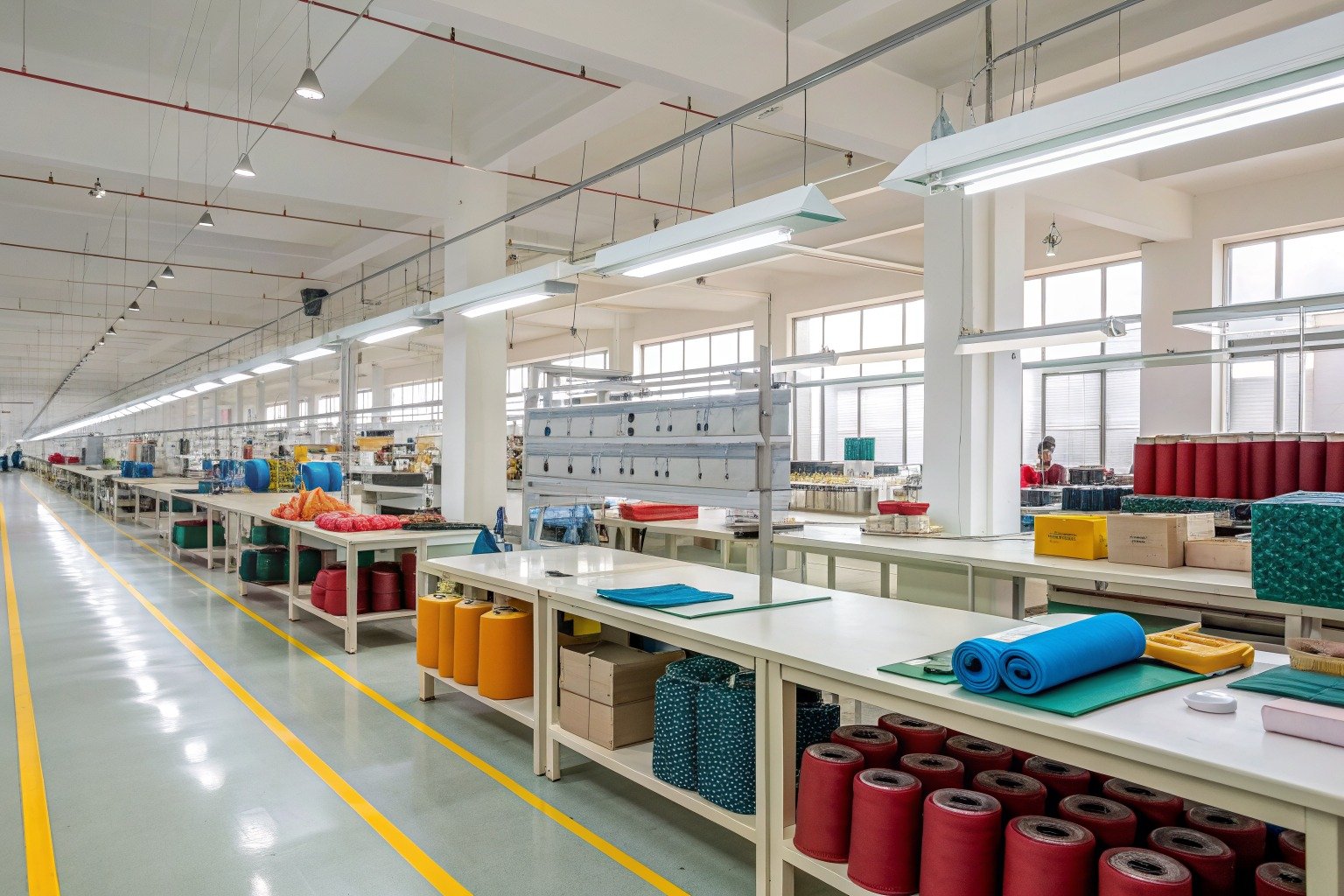
Are you struggling with inconsistent quality, high return rates, or reputation damage in your bags and luggage manufacturing? Traditional quality control methods often rely on random sampling and manual inspections that cannot guarantee consistent excellence across complex bag constructions and diverse materials.
Smart quality management offers significant advantages for bags and luggage manufacturing through AI-powered inspection, real-time monitoring, predictive analytics, and data-driven process control that work together to prevent defects rather than simply detecting them.This technological transformation addresses the unique quality challenges of bag production while creating tangible business benefits across operations, customer satisfaction, and brand reputation.
Let’s explore the specific advantages that smart quality management delivers across different aspects of bags and luggage manufacturing and how these benefits translate into competitive advantages in the demanding fashion and travel accessories market.
How does smart quality management improve defect detection?
Traditional bag quality control typically relies on visual inspections and manual testing that sample only a small percentage of production. This approach allows defects to proceed through multiple manufacturing stages before detection, creating significant rework costs and potential brand damage.
Smart quality management improves defect detection through 100% automated inspection, microscopic precision, and consistent standards application that identify issues immediately during production rather than after completion. This proactive approach addresses quality problems at their source.
What defect types can smart systems identify that humans miss?
Comprehensive automated inspection detects subtle defects that escape human visual checks due to fatigue, sampling limitations, or simply being invisible to the naked eye. Our AI vision systems for leather bag production identify grain inconsistencies, micro-scratches, and color variations as small as 0.1mm with 99.9% accuracy. When manufacturing our premium travel luggage, the systems detected subtle variations in wheel alignment that would have caused uneven wear and early failure—issues that manual inspection consistently missed until customer complaints emerged. For canvas backpack production, the technology identifies weaving defects, coating inconsistencies, and stitching irregularities across entire material rolls, preventing flawed materials from entering production. This comprehensive detection has reduced customer returns for visual defects by 72% and improved our first-quality yield from 78% to 96%.
How does real-time monitoring prevent quality issues?
Continuous parameter tracking identifies process deviations immediately, enabling correction before defects occur. Our IoT-enabled sewing equipment monitors 22 parameters including stitch length, thread tension, and needle temperature during bag assembly. When producing our waterproof backpack series, the system detected that humidity variations were affecting seam tape adhesion and automatically adjusted application temperature to maintain perfect sealing. This intervention prevented the production of 800 defective units that would have leaked during use. The monitoring also tracks equipment performance, predicting maintenance needs before they impact quality. Recently, vibration analysis identified developing bearing wear in our heavy-duty stitching machines that was causing subtle stitch inconsistencies in our luggage strap production. The predictive alert enabled replacement during planned downtime, maintaining perfect stitch quality throughout production runs.

What operational efficiencies does smart quality management create?
Traditional quality management often creates operational bottlenecks through manual inspections, delayed problem identification, and reactive corrections that disrupt production flow and increase costs. These inefficiencies become particularly problematic in complex bag manufacturing with multiple components and assembly stages.
Smart quality management creates operational efficiencies through automated testing, reduced rework, optimized processes, and preventive interventions that minimize disruptions while maintaining consistent quality standards across all production volumes.
How does automated testing reduce quality control time?
Integrated inspection automation performs comprehensive quality verification without slowing production. Our smart quality systems for laptop bag production complete 47 quality checks in 3.2 minutes per unit—a process that previously required 12 minutes of manual inspection. The automation includes functional testing of zippers, buckles, and locking mechanisms with consistent force application and performance measurement. When manufacturing our business briefcase line, the automated testing identified that a specific batch of magnetic closures had 23% weaker holding power than specifications. The immediate detection prevented installation in 1,200 units, saving approximately $28,000 in rework costs and potential warranty claims. The system has reduced our quality control labor requirements by 64% while actually improving detection accuracy and coverage.
What waste reduction benefits come from preventive quality?
Predictive quality analytics identifies potential issues before they create waste or rework. Our machine learning system analyzes production parameters against quality outcomes to build predictive models that flag emerging issues. When producing our rolling luggage series, the system detected that specific temperature and humidity conditions predicted 89% of wheel alignment issues. By automatically adjusting assembly parameters when these conditions occurred, we eliminated this defect category entirely. The analytics also optimize material usage by identifying the root causes of cutting waste and construction errors. Recently, the system revealed that pattern orientation variations in our tote bag production were causing 12% material waste—an issue that had persisted for months without detection through manual methods. By standardizing cutting patterns based on this insight, we achieved annual material savings of approximately $45,000.

How does smart quality management enhance product durability?
Bags and luggage face demanding usage conditions that require exceptional durability and reliability. Traditional quality methods often test samples destructively but cannot guarantee consistent durability across all production, leading to field failures that damage brand reputation and increase warranty costs.
Smart quality management enhances product durability through comprehensive testing, material verification, and construction validation that ensure every bag meets durability standards while providing data for continuous product improvement.
What durability testing capabilities do smart systems provide?
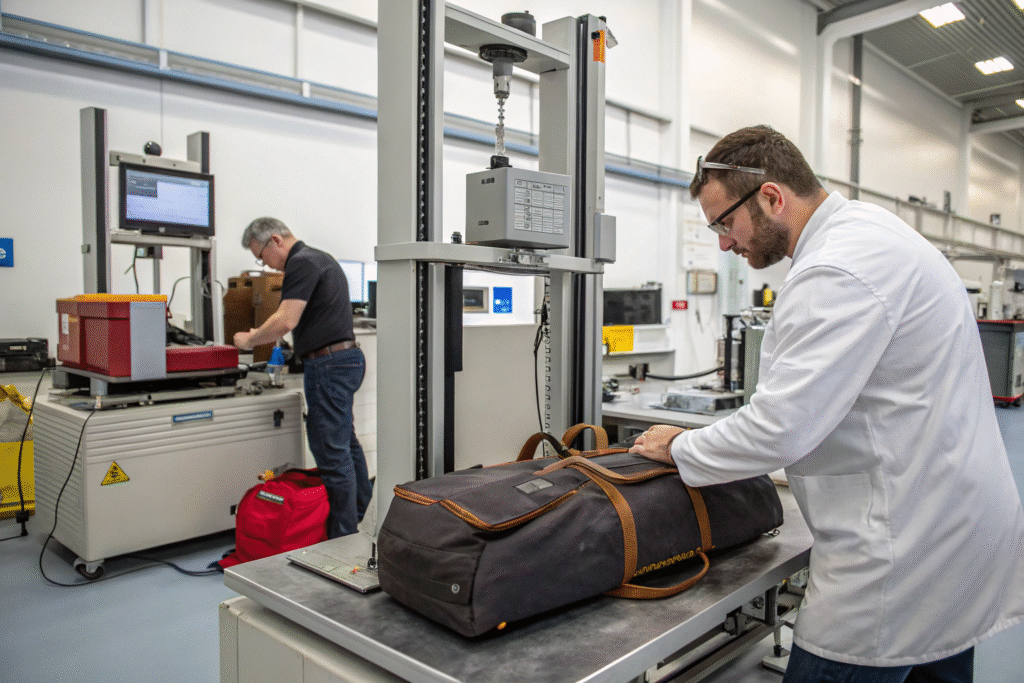
Automated endurance testing performs consistent durability verification across all production. Our smart testing equipment for travel luggage conducts 15,000 wheel revolution tests, 10,000 handle extension cycles, and 5,000 zip operations on every design before production approval. When testing our expandable suitcase design, the automated testing identified that specific hinge geometries would fail after approximately 3,000 cycles—well below our 10,000-cycle target. The data enabled design optimization before tooling, preventing what would have been a costly field failure pattern. During production, the system performs sample destruction testing from each batch, ensuring consistent material strength and construction quality. This comprehensive approach has reduced warranty claims for durability issues by 81% and improved product longevity ratings in independent reviews.
How does material intelligence improve product reliability?
Advanced material analytics ensure consistent quality and performance across all raw materials. Our smart quality system includes material testing equipment that verifies fabric strength, coating adhesion, and hardware durability before production begins. When a new supplier provided polyester fabric for our backpack collection, the automated testing detected that UV resistance was 37% below specifications despite visual similarity to approved materials. This early detection prevented the production of 3,000 units that would have faded prematurely during use. The system also monitors material behavior during production, identifying lots that require parameter adjustments. For our leather messenger bag line, the system tracks hide characteristics and automatically adjusts cutting and sewing parameters to accommodate natural variations, maintaining consistent quality despite material differences. This material intelligence has improved product consistency and reduced material-related customer complaints by 76%.
What business advantages does smart quality management deliver?
Beyond operational improvements, smart quality management delivers significant business advantages that impact profitability, brand reputation, and competitive positioning. These benefits extend throughout the organization and create value across financial, strategic, and customer relationship dimensions.
Smart quality management delivers business advantages through reduced costs, enhanced reputation, increased customer loyalty, and data-driven innovation that collectively strengthen market position and create sustainable competitive advantages.
How does smart quality management reduce costs?
Comprehensive cost reduction occurs across multiple areas including rework, warranty, returns, and inspection labor. Our implementation has reduced rework costs by 67% through early defect detection and prevention. Warranty claims have decreased by 73% due to improved product reliability and durability. The automation of inspection processes has reduced quality control labor requirements by 58% while improving coverage and accuracy. Perhaps most significantly, the reduction in customer returns has preserved approximately $125,000 annually in lost revenue and reverse logistics costs. The system also identifies subtle efficiency opportunities—recent analysis revealed that optimizing our seam sealing process for waterproof bags could reduce material consumption by 14% while maintaining performance, creating additional savings of approximately $18,000 yearly. These combined cost improvements have increased our gross margin by 5.2 percentage points despite rising material costs.
What competitive advantages come from quality leadership?
Market differentiation through quality excellence creates compelling positioning in competitive segments. Our smart quality management system has become a key selling point when pitching to premium retailers and corporate clients. When competing for a major airline’s crew luggage contract, our demonstrated quality consistency and comprehensive testing protocols were the deciding factor in winning the 15,000-unit order over three competitors. The system also enables innovation in quality communication—each of our premium briefcases now includes a QR code that provides access to its quality verification records, creating transparency that justifies premium pricing. This quality leadership positioning has helped us move into higher-margin market segments, with our average unit price increasing by 34% while maintaining sales volume. The reputation for quality excellence has also reduced our customer acquisition costs, as referrals and repeat purchases now drive 52% of our revenue growth.

Conclusion
Smart quality management delivers transformative advantages across defect detection, operational efficiency, product durability, and business performance for bags and luggage manufacturers. By implementing AI-powered inspection, real-time monitoring, predictive analytics, and automated testing, manufacturers can achieve quality consistency impossible with traditional methods while reducing costs and enhancing brand reputation. The advantages extend beyond immediate quality improvements to include strategic positioning, customer loyalty, and innovation capabilities that create sustainable competitive advantages in the demanding bags and luggage market. As consumer expectations for quality and transparency continue to rise, smart quality management provides the technological foundation to not only meet but exceed these expectations while maintaining profitability and market leadership.
If you’re looking to leverage smart quality management advantages for your bags and luggage manufacturing, we invite you to contact our Business Director, Elaine. She can discuss how our smart quality expertise and technological capabilities can help you achieve your quality improvement and business objectives. Reach her at: elaine@fumaoclothing.com.