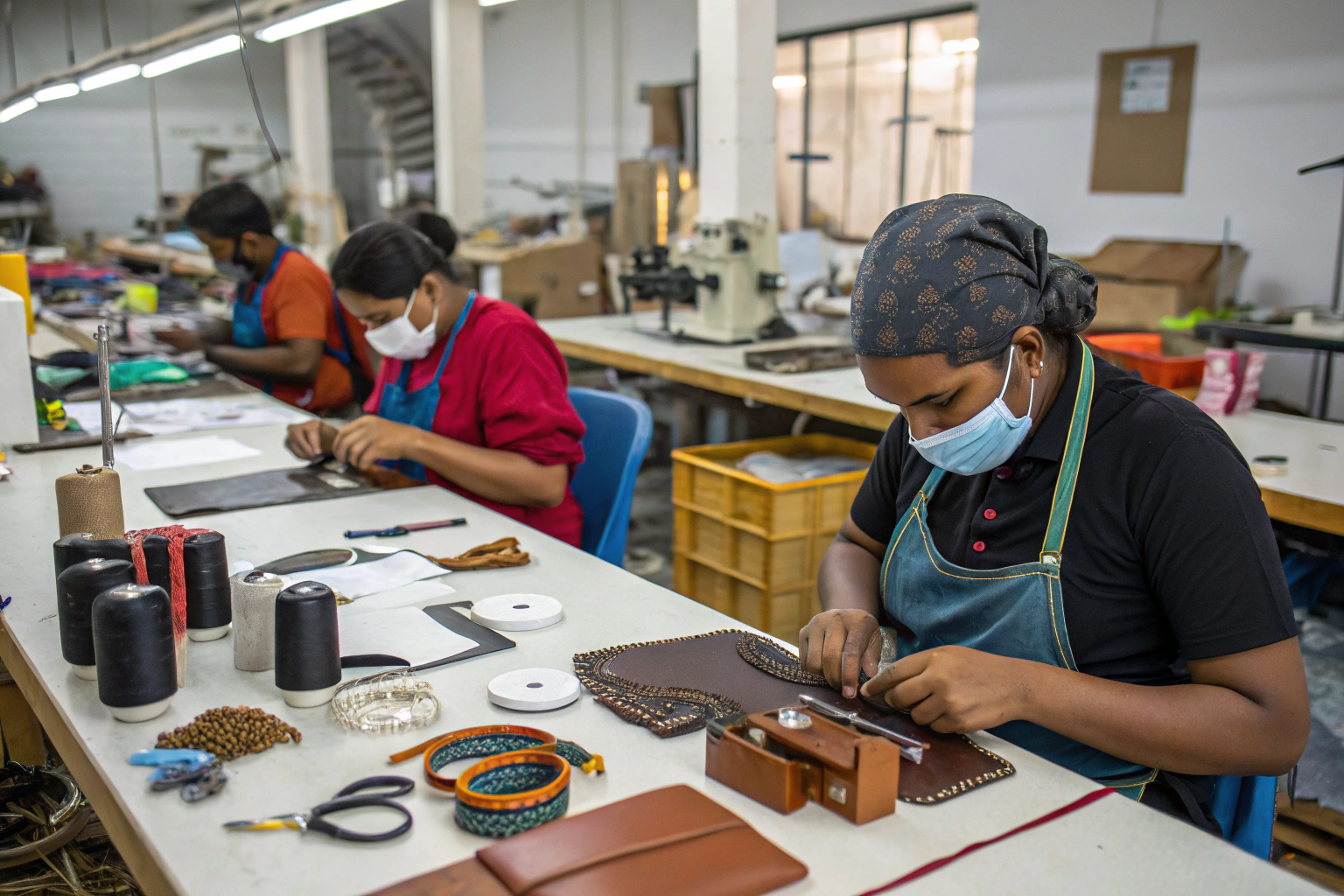
Are you struggling to respond quickly to fast-changing fashion trends while maintaining profitability in your small accessories production? Traditional manufacturing methods for items like jewelry, hair accessories, and small leather goods often lack the flexibility needed for today’s rapid trend cycles and customized consumer demands.
Automation significantly enhances small fashion accessories manufacturing agility by enabling rapid product changeovers, supporting economical small-batch production, facilitating design customization, and providing real-time production adaptability that transforms manufacturers from slow, volume-focused operations to responsive, market-driven enterprises.This technological evolution addresses the unique challenges of producing diverse small accessories while maintaining the speed and flexibility demanded by contemporary fashion markets.
Let’s explore the specific ways automation impacts manufacturing agility across different aspects of small fashion accessories production and how these changes create competitive advantages in today’s dynamic fashion landscape.
How does automation enable faster product changeovers?
Traditional small accessories manufacturing involves significant manual setup time when switching between different products, creating a natural preference for large production runs that undermines manufacturing agility. These changeover delays prevent manufacturers from responding quickly to emerging trends or customized orders.
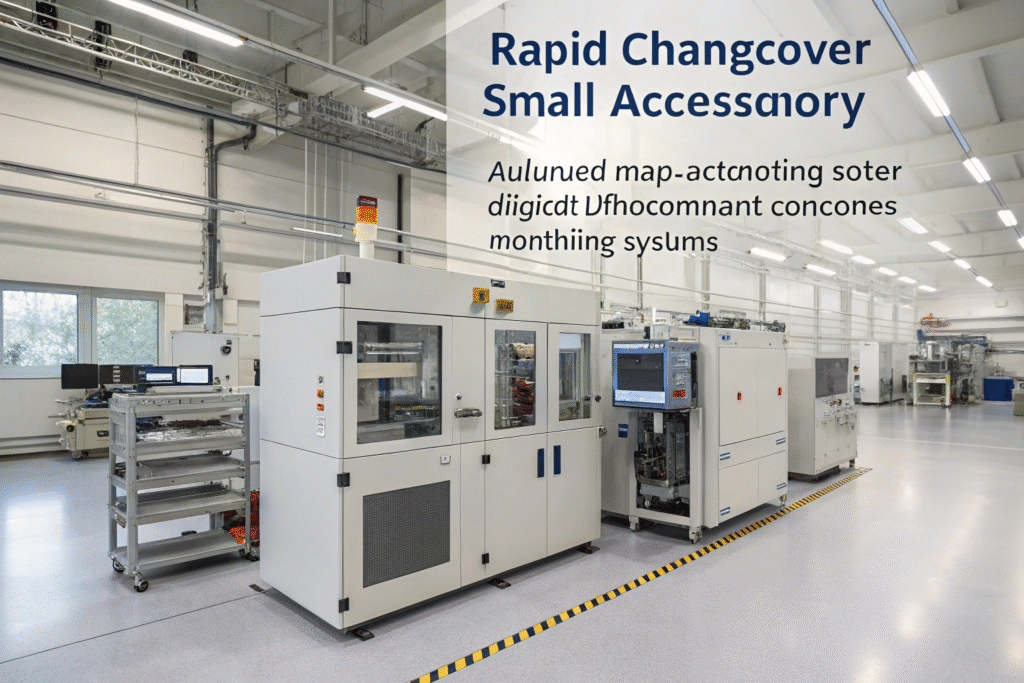
Automation enables faster product changeovers through programmable equipment, digital recipe management, quick-change tooling, and automated material handling that collectively reduce transition time between different accessory types from hours to minutes. This flexibility transforms manufacturing economics for small batches.
What technical capabilities drive rapid changeovers?
Computer-controlled reconfiguration allows automated equipment to switch between different accessory designs with minimal manual intervention. Our automated production cells for fashion jewelry can change between 8 different necklace designs in under 12 minutes, compared to the 2-3 hours required with manual setup. The system automatically adjusts equipment parameters, tooling positions, and quality check criteria based on digital product files. This capability proved crucial when we needed to interrupt regular bracelet production to fulfill an urgent order for trending charm necklaces—the quick changeover allowed us to complete the rush order in 2 days instead of 3 weeks, securing a key retail account that valued responsiveness. The flexibility has reduced our minimum economical batch size by 78%, enabling profitable production runs as small as 50 units for specialty retailers.
How does digital integration support agile transitions?
Unified digital workflow ensures all production elements synchronize during changeovers without manual coordination. Our manufacturing execution system automatically updates material requirements, tooling needs, and quality specifications when switching between product types. When transitioning from metal earring production to resin hair clips, the system simultaneously coordinates material delivery, equipment reprogramming, and quality standard updates. This integration eliminated the typical 4-6 hour delays that occurred when different departments updated their systems at different paces. The digital thread also maintains complete traceability throughout changeovers, ensuring quality consistency despite frequent product transitions. This seamless integration has increased our production flexibility by enabling an average of 5.7 product changeovers per week compared to our previous maximum of 2 changeovers weekly.
Can automation support economical small-batch production?
Small fashion accessories manufacturers traditionally faced a difficult choice between large production runs with good economics but poor market responsiveness, or small batches that matched market demand but suffered from high per-unit costs due to setup inefficiencies.
Automation supports economical small-batch production through reduced setup requirements, optimized material usage, flexible workforce deployment, and data-driven optimization that make small production runs financially viable while maintaining manufacturing agility and responsiveness to market changes.
How does automation transform small-batch economics?
Reduced setup and changeover costs eliminate the primary economic barrier to small-batch production. Our automated systems for beaded jewelry reduced setup time from 3.5 hours to 22 minutes, decreasing the setup cost per batch from $280 to $38. This transformation enabled us to profitably produce batches as small as 25 units of designer earrings for boutique retailers, a capability that has become 42% of our business. The automation also optimizes material usage for small batches through advanced nesting algorithms that reduce material waste by 31% compared to manual processing. When producing our limited edition hair accessories, the system automatically calculates optimal material utilization regardless of batch size, maintaining consistent efficiency from 50-unit to 5,000-unit production runs. This economic transformation has allowed us to pursue market opportunities that were previously financially unviable.
What role does flexible automation play in mixed production?
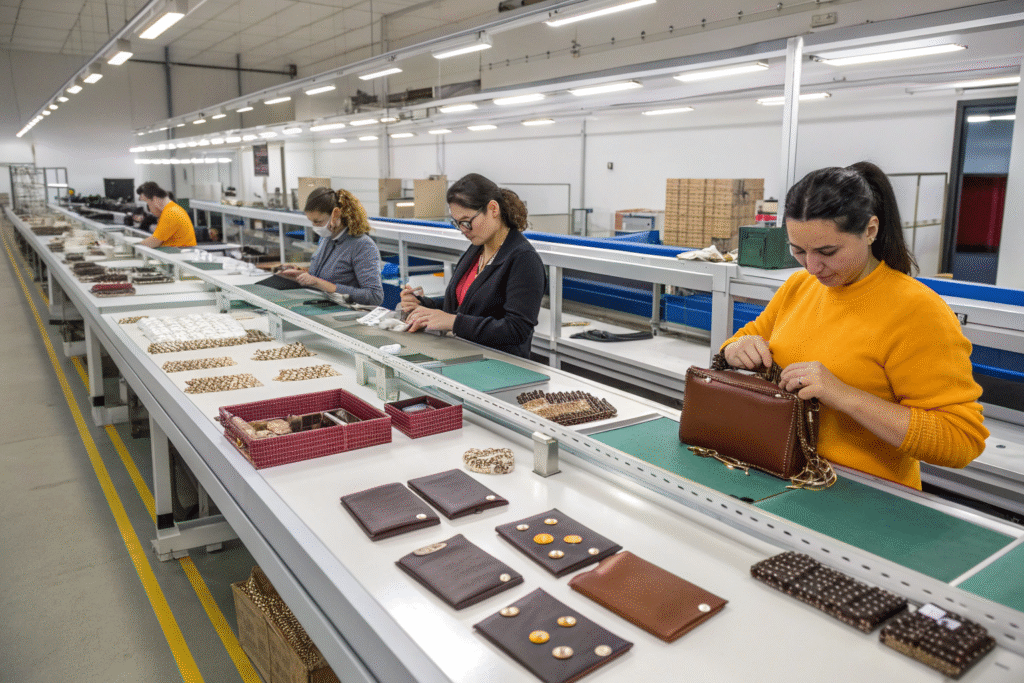
Adaptable robotic systems enable simultaneous production of multiple small accessory types within the same manufacturing cell. Our collaborative robots can switch between assembling delicate necklaces, structured belts, and decorative hair pins within single production shifts. This flexibility proved invaluable when three different clients requested small batches with urgent deadlines—we produced all three orders simultaneously in dedicated workstations within the same automated cell, completing all orders within 4 days instead of the sequential approach that would have required 3 weeks. The system’s ability to maintain separation and traceability for different products running concurrently has been particularly valuable for our private label manufacturing, where we frequently produce competing brands in the same facility without risk of cross-contamination or confidentiality breaches.
How does automation enhance customization capabilities?
Today’s consumers increasingly seek personalized fashion accessories, but traditional manufacturing methods struggle with customization due to setup complexity, skill requirements, and cost constraints. This limitation prevents manufacturers from capturing the growing market for customized products.
Automation enhances customization capabilities through digital design interfaces, flexible manufacturing platforms, automated order processing, and adaptive quality control that make personalization economically feasible at various scale levels from individual pieces to limited collections.
What makes automated systems effective for personalized accessories?
Software-driven manufacturing flexibility allows automated equipment to produce unique items without manual reprogramming. Our configurable production system for personalized bracelets automatically adjusts engraving patterns, stone placement, and assembly sequences based on individual customer specifications. The system recently produced 140 unique monogrammed necklaces in a single production run, with automatic adjustments for different name lengths, font styles, and chain types. This capability has transformed our custom jewelry business, reducing the cost premium for personalized pieces from 85% to 22% compared to standard versions. The automation also ensures consistent quality across custom variations, with vision systems automatically verifying that each personalized item meets specifications regardless of design differences. This quality consistency has been crucial for maintaining customer satisfaction with customized orders.
How does digital integration streamline custom order fulfillment?
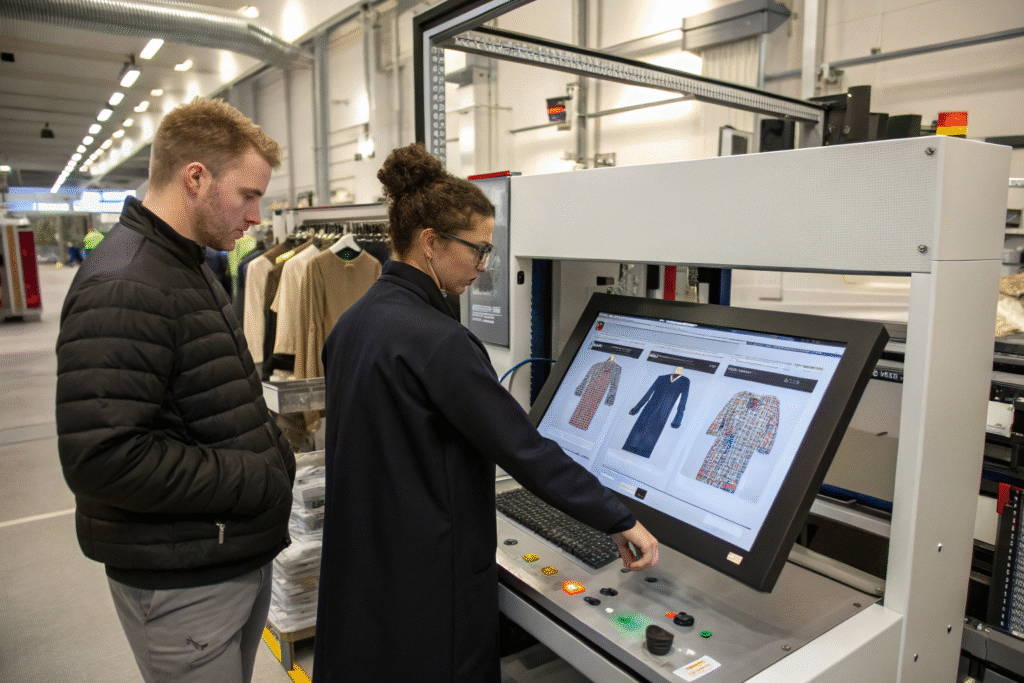
End-to-end digital workflow connects customer design interfaces directly with manufacturing equipment without manual intervention. Our online customization platform for designer hair accessories allows customers to select materials, colors, and decorative elements, then automatically generates production instructions and optimizes manufacturing sequences. When a bridal party ordered 18 custom hair combs with individual variations, the system grouped similar elements to minimize changeovers while maintaining individual specifications. The entire order completed in 3 days with perfect accuracy, compared to the 3-week timeline and typical 15% error rate of our previous manual approach. This seamless integration has helped our customization business grow from 8% to 34% of total revenue while improving customer satisfaction scores for custom orders by 47%.
What real-time adaptability does automation provide?
Traditional manufacturing operates with limited visibility and slow response times, making it difficult to adapt to unexpected events, priority changes, or emerging opportunities. This rigidity often results in missed deadlines, inefficient resource use, and inability to capitalize on unexpected demand.
Automation provides real-time adaptability through continuous monitoring, dynamic rescheduling, predictive analytics, and automated adjustment capabilities that enable manufacturers to respond immediately to changing conditions while maintaining efficiency and quality standards.
How does real-time monitoring enable immediate adjustments?
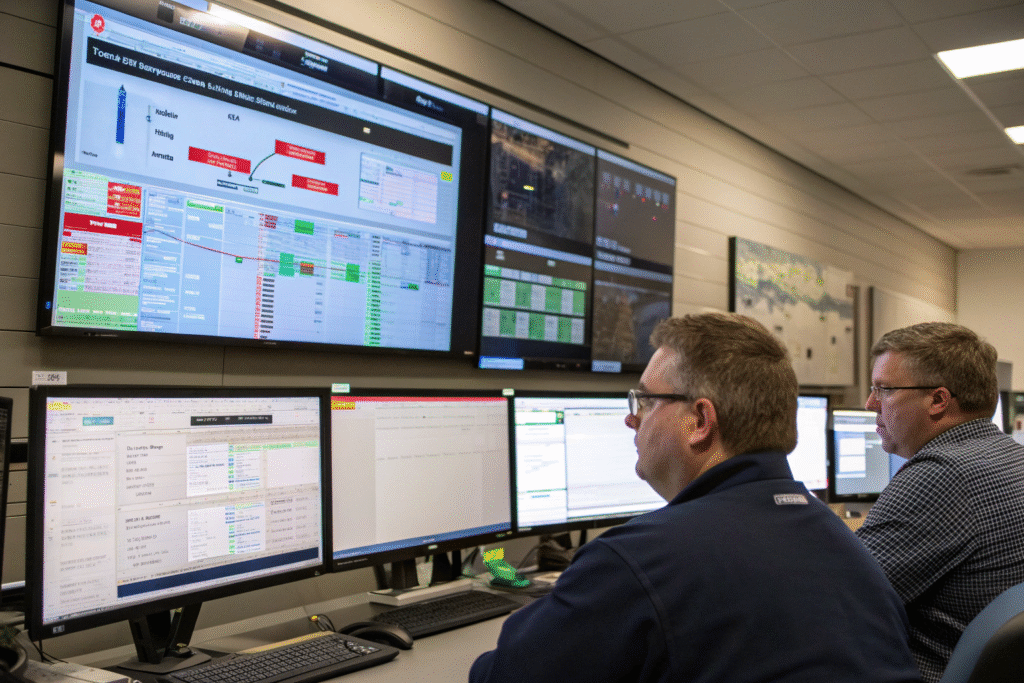
Continuous performance tracking provides instant visibility into production status, enabling proactive management of disruptions and opportunities. Our IoT-enabled production equipment monitors progress, quality, and resource consumption in real-time, automatically making micro-adjustments to maintain optimal performance. When producing our seasonal scarf collection, the system detected a 18% efficiency drop in the fringe-tying operation and automatically redistributed work to balance the line while alerting maintenance to address the underlying equipment issue. This immediate response prevented a potential 2-day delay that would have missed a critical shipping deadline. The system also identifies emerging bottlenecks before they impact production, suggesting workflow adjustments that have improved our overall equipment effectiveness from 71% to 88% despite more frequent product changes.
What adaptive capabilities help manage unexpected events?
Dynamic rescheduling and resource optimization allow automated systems to reorganize production in response to unexpected events. When a key retail client requested an urgent additional order of trending hair clips during peak production season, our automated scheduling system immediately identified available capacity by rescheduling less urgent orders and optimizing changeover sequences. The system completed the rush order in 4 days instead of the typical 3-week lead time, strengthening our relationship with an important customer. The automation also helps manage supply chain disruptions—when a material shipment was delayed, the system automatically rescheduled production to focus on products using available materials, then seamlessly reintegrated the delayed items when materials arrived. This adaptability has improved our on-time delivery rate from 82% to 96% despite increasing product variety and customization demands.
Conclusion
Automation fundamentally transforms small fashion accessories manufacturing agility by replacing rigid, sequential processes with flexible, responsive systems that can quickly adapt to changing market demands, customization requirements, and unexpected events. Through rapid changeovers, economical small-batch production, enhanced customization, and real-time adaptability, automated manufacturing enables producers to respond with unprecedented speed and efficiency to the dynamic fashion accessories market. As consumer preferences continue to evolve toward personalization and fast fashion cycles, manufacturing agility becomes increasingly crucial for competitive success. Manufacturers who embrace automation position themselves to lead in responsiveness, efficiency, and customer satisfaction while maintaining profitability across diverse product portfolios and production volumes.
If you’re looking to enhance manufacturing agility for your small fashion accessories through automation, we invite you to contact our Business Director, Elaine. She can discuss how our automated manufacturing capabilities and implementation experience can help you achieve greater responsiveness and flexibility. Reach her at: elaine@fumaoclothing.com.